Atanuji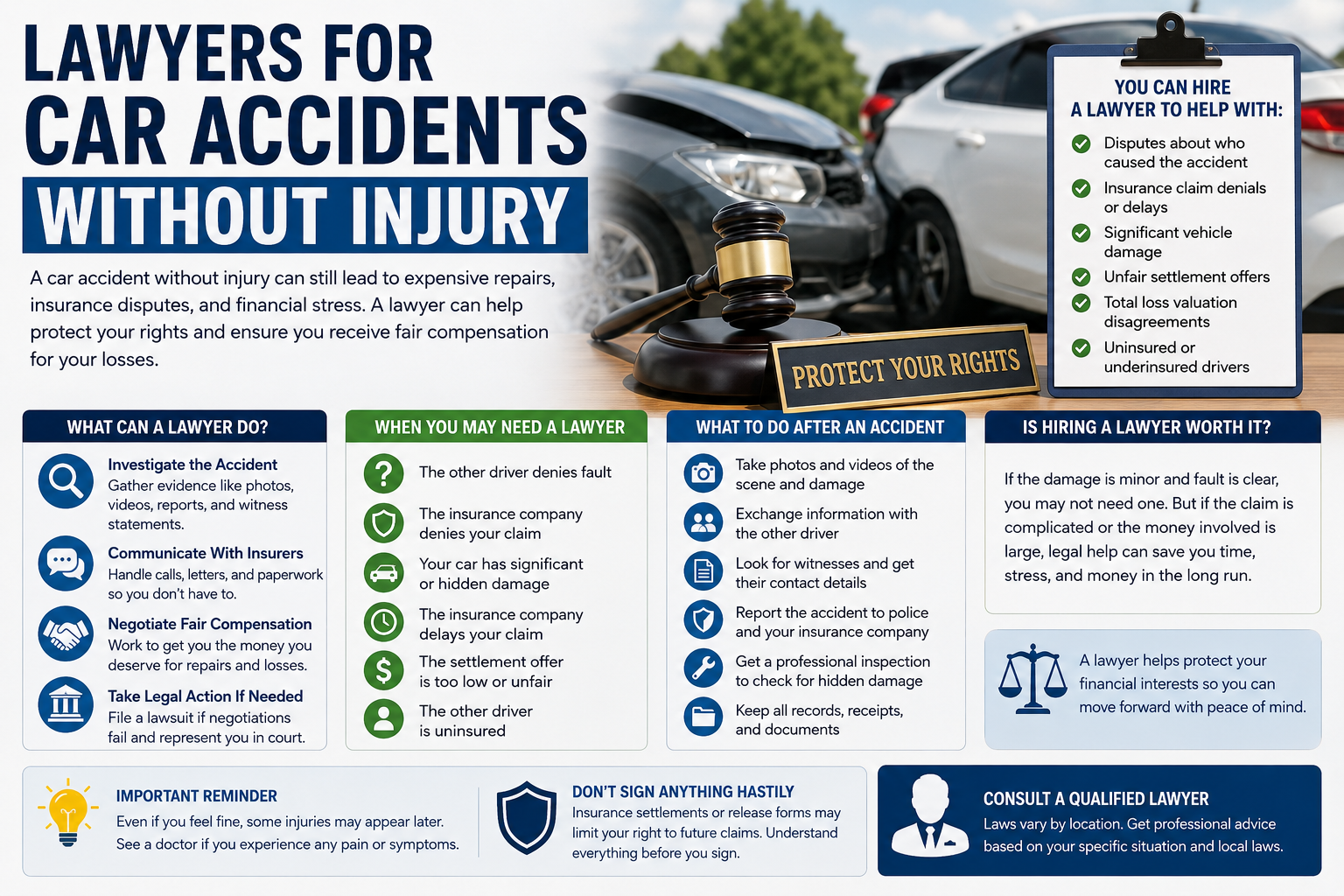
Lawyers for Car Accidents Without Injury : Everything You Need to Know
A car accident can be a stressful experience, regardless of how serious the collision is. Even when no one is physically injured, an accident can still create expensive problems involving vehicle repairs, insurance claims, property damage, and disagreements about who was responsible.
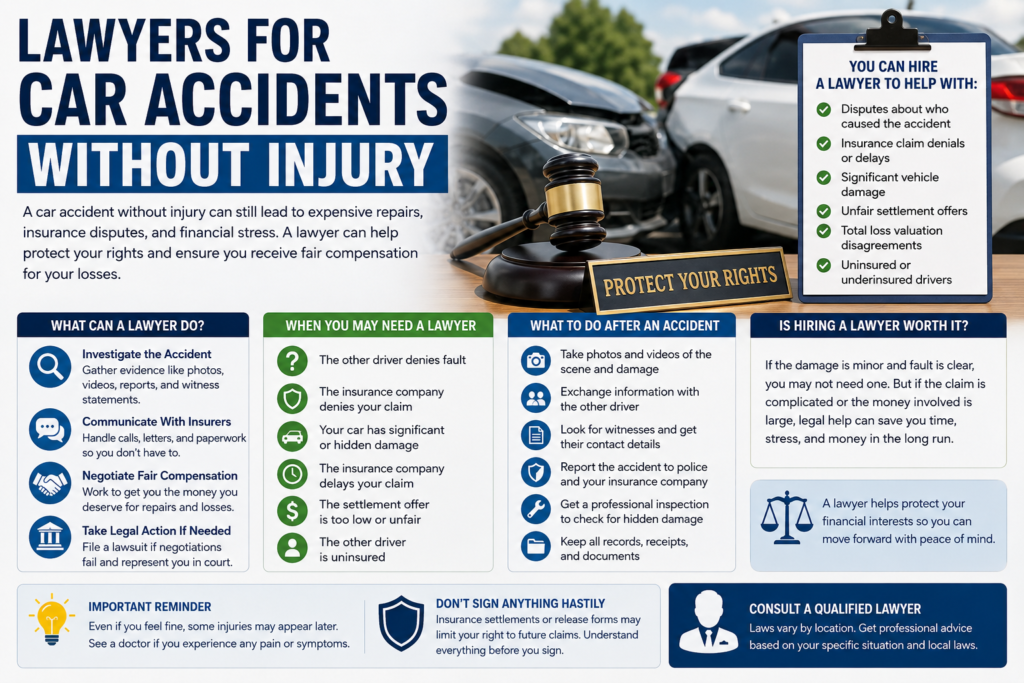
Many people believe that a lawyer is only necessary when someone suffers a serious injury. While personal injury lawyers commonly handle cases involving physical injuries, there are situations where legal assistance can also be useful after a car accident in which nobody appears to be injured.
So, can you hire a lawyer for a car accident without an injury? The answer is yes. However, whether hiring a lawyer is worthwhile depends on the circumstances, the amount of property damage, the complexity of the insurance claim, and the laws in your location.
This guide explains what lawyers can do after a non-injury car accident, when you may need legal help, and how to protect your interests after a collision.Lawyers for Car Accidents Without Injury
Can You Hire a Lawyer After a Car Accident Without an Injury?
Yes. You can generally consult or hire a lawyer after a car accident even if you were not injured.
A car accident can result in financial losses that have nothing to do with medical expenses. For example, you may have to deal with:
- Damage to your vehicle
- Expensive repair bills
- Towing costs
- Storage charges
- Rental car expenses
- Damage to personal property inside the vehicle
- Disputes about who caused the accident
- Insurance claim delays
- Claim denials
- Disagreements over the value of your vehicle
In a simple accident where the other driver clearly caused the crash and their insurance company agrees to pay for all reasonable damages, you may not need an attorney.
However, the situation can become much more complicated when the other driver denies responsibility or the insurance company refuses to provide fair compensation.
Why Would You Need a Lawyer If Nobody Was Injured?
The main reason to hire a lawyer after a non-injury accident is usually to protect your financial interests.
A vehicle can be extremely expensive to repair or replace. Even a crash that looks minor can cause hidden damage.
Modern vehicles contain sophisticated technology, including:
- Parking sensors
- Rear cameras
- Radar systems
- Collision warning systems
- Airbag sensors
- Electronic components
A damaged bumper may not simply require a new piece of plastic. The accident may also affect expensive equipment located behind the bumper.
Because of this, a minor-looking accident can sometimes result in a surprisingly large repair bill.
A lawyer may become useful when you have difficulty recovering the money needed to repair or replace your vehicle.
Situations Where You May Need a Lawyer
1. The Other Driver Says the Accident Was Your Fault
One of the biggest problems following a car accident is a disagreement about responsibility.
Imagine that another driver hits your car at an intersection. You believe they ignored a traffic signal, but they later tell their insurance company that you were responsible.
Suddenly, the accident becomes a dispute.
A lawyer may help examine evidence such as:
- Photographs from the accident scene
- Videos
- Dashcam footage
- Witness statements
- Police reports
- Traffic camera footage
- Vehicle damage
- Road conditions
- Traffic signs and signals
Evidence can be especially important when both drivers provide completely different versions of what happened.
2. The Insurance Company Refuses to Pay
Insurance companies investigate accident claims before making payments.
Sometimes an insurer may deny a claim because it believes:
- Their driver was not responsible
- There is insufficient evidence
- The damage existed before the accident
- The insurance policy does not cover the loss
- The accident was not properly reported
- The information provided is inconsistent
A denied claim can be frustrating, particularly when you believe the other driver was clearly responsible.
A lawyer may review the circumstances of the accident and help you understand what options may be available.
3. Your Car Has Serious Damage
A major accident does not always cause physical injuries.
Modern vehicles are designed with safety features that can protect people during crashes, but the vehicle itself may suffer extensive damage.
Your car may require:
- Body repairs
- Mechanical repairs
- Replacement parts
- Electronic repairs
- Safety system inspections
- Frame repairs
If the repair costs are extremely high, the insurance company may decide that the vehicle is a total loss.
This means the insurer may determine that repairing the car is not financially practical.
However, you may disagree with the amount the insurance company offers for your vehicle.
A lawyer may be able to help you understand the valuation process and evaluate whether further action is appropriate.
What Can a Car Accident Lawyer Do?
A lawyer handling a non-injury car accident may provide assistance in several ways.
Investigating the Accident
A lawyer may help gather and organize evidence.
Important evidence could include:
- Accident reports
- Photographs
- Witness information
- Video recordings
- Vehicle repair estimates
- Insurance documents
The sooner important evidence is preserved, the better.
Communicating With Insurance Companies
Insurance claims often involve a significant amount of paperwork and communication.
You may have to speak with:
- Your insurance company
- The other driver’s insurance company
- Claims adjusters
- Repair shops
- Vehicle valuation specialists
A lawyer may communicate on your behalf and help you understand the legal significance of requests or documents.
Negotiating Property Damage Compensation
The first offer made by an insurance company may not always cover everything you believe you have lost.
Depending on the circumstances and applicable laws, disputes may involve:
- Repair costs
- Vehicle value
- Towing expenses
- Storage costs
- Rental transportation
- Other damaged property
A lawyer can evaluate whether a proposed settlement reasonably addresses the available legal claims.
Filing a Lawsuit
If negotiations fail, legal action may sometimes be an option.
The appropriate court or legal process will depend on factors such as:
- The value of the claim
- Local laws
- Where the accident happened
- The parties involved
For smaller disputes, a simplified court process may be available in some locations.
Is Hiring a Lawyer Worth It for a No-Injury Accident?
This is one of the most important questions.
The answer depends largely on the value and complexity of your case.
For example, imagine your vehicle has only minor damage costing a small amount to repair. Hiring a lawyer and paying significant legal fees may not make financial sense.
On the other hand, suppose your car suffered extensive damage worth thousands of dollars, the other driver disputes fault, and the insurance company denies your claim.Lawyers for Car Accidents Without Injury
In that situation, consulting a lawyer may be more reasonable.
Before hiring an attorney, consider:
- How much is your claim worth?
- How complicated is the dispute?
- Is liability clear?
- Is insurance coverage available?
- How much will legal representation cost?
- Can the problem be resolved through negotiation?
A consultation with a qualified lawyer may help you decide whether professional representation is financially worthwhile.
Why Some Personal Injury Lawyers May Not Accept These Cases
Many car accident lawyers focus primarily on cases involving physical injuries.
This is partly because injury claims may involve significant medical expenses, lost income, and other damages.
A property-damage-only claim may involve a smaller financial recovery.
For this reason, some personal injury attorneys may decide not to accept cases where nobody was injured.
This does not mean you cannot obtain legal assistance.
Depending on your needs, you may consider contacting lawyers who handle:
- Property damage disputes
- Insurance disputes
- Civil litigation
- Consumer protection matters
- Motor vehicle claims
You may also consider hiring a lawyer for a limited service, such as reviewing documents or providing legal advice.
How Much Does a Lawyer Cost?
Lawyers can use different fee structures.
Hourly Fees
The lawyer charges for the time spent working on your case.
This may include:
- Phone calls
- Meetings
- Document review
- Negotiations
- Legal research
Flat Fees
Some lawyers charge one fixed amount for a specific service.
For example, an attorney might charge a flat fee for:
- Reviewing an insurance settlement
- Writing a legal letter
- Providing a consultation
Contingency Fees
In some cases, a lawyer may receive a percentage of money recovered.
However, this type of arrangement may be less common for cases involving only vehicle or property damage.
Before hiring a lawyer, make sure you clearly understand:
- The legal fee
- Additional costs
- Court expenses
- Payment responsibilities
- What happens if the case is unsuccessful
Always read the legal agreement carefully before signing.
What Should You Do After a Car Accident Without Injuries?
Even when nobody is hurt, your actions after an accident can be important.
1. Stay Calm
A car accident can cause panic and anger.
Try to remain calm and avoid arguments with the other driver.
Do not make unnecessary statements about fault before the situation has been properly investigated.
2. Move to a Safe Location
If your vehicle can be safely moved and doing so is permitted, get out of danger and away from active traffic.
Your safety should always come first.
3. Exchange Information
Collect important details from the other driver.
This may include:
- Name
- Contact information
- Vehicle registration details
- Insurance information
Provide the information required by applicable law, but avoid unnecessary arguments.
4. Take Photos and Videos
Photographs can become extremely important evidence.
Take pictures of:
- Vehicle damage
- Both vehicles
- License plates
- The accident location
- Road conditions
- Traffic signs
- Traffic lights
- Debris
Take more photographs than you think you need.
Conditions at the accident scene can change quickly after the vehicles are moved.
5. Look for Witnesses
If anyone saw the accident, ask for their contact information.
An independent witness may provide valuable information if the drivers later disagree about what happened.
6. Report the Accident
Accident reporting requirements vary depending on where you live and how serious the collision was.
You may need to report the accident to:
- Law enforcement authorities
- Your insurance company
- Other relevant agencies
Make sure you understand the requirements that apply to your location.
Hidden Vehicle Damage Can Be a Serious Problem
One of the biggest mistakes people make is assuming that small visible damage means small repair costs.
For example, a bumper may have only a small scratch.
However, behind that bumper, the accident could have damaged:
- Sensors
- Mounting systems
- Electrical components
- Safety equipment
Similarly, a collision may affect the vehicle’s alignment or suspension.
For this reason, consider obtaining a professional inspection before agreeing to a final settlement.
Once you accept certain settlements or sign legal documents, your ability to seek additional compensation may be limited depending on the terms and applicable law.
Should You Accept the Insurance Company’s First Offer?
You should not feel pressured to immediately accept an offer simply because it is presented to you.
First, understand what the offer covers.
Ask yourself:
- Does it cover all repair costs?
- Have I received a complete vehicle inspection?
- Does it include expenses that may legally be recoverable?
- Am I being asked to sign a release?
- Do I understand the consequences of signing?
If you have doubts about an offer or document, consider getting professional advice before signing.
What If the Other Driver Is Uninsured?
An accident involving an uninsured driver can create additional complications.
If the responsible driver does not have insurance, recovering compensation may be more difficult.
Depending on your insurance policy and local laws, you may have other options available.
Possible coverage may depend on the specific terms of your policy.
You should carefully review your insurance documents and consider seeking legal advice if the situation involves significant financial losses.
How to Choose the Right Lawyer
If you decide to hire an attorney, choose someone with relevant experience.
Look for a lawyer who understands:
- Car accident disputes
- Property damage claims
- Insurance policies
- Civil litigation
Before making a decision, ask questions such as:
Have you handled property-damage-only car accident cases?
What are my legal options?
How do you charge for your services?
Do you believe hiring a lawyer is financially worthwhile for my case?
What documents should I bring?
A good lawyer should provide realistic information and clearly explain the possible advantages and disadvantages of your case.
Can You Handle a No-Injury Accident Claim Yourself?
Yes. Many straightforward property damage claims can be handled without a lawyer.
You may choose to manage the process yourself when:
- Fault is clear
- The other driver has insurance
- The insurance company accepts responsibility
- The damage is relatively minor
- The settlement offer is reasonable
Keep organized records of everything related to the accident.
Save:
- Photos
- Videos
- Repair estimates
- Receipts
- Emails
- Letters
- Insurance claim numbers
Documentation can make the claims process much easier.
Final Thoughts
A car accident does not need to involve physical injuries to create serious financial and legal problems.
Vehicle repairs can be expensive, insurance companies may dispute claims, and drivers may disagree about who caused the accident.
For a straightforward accident with minor property damage and a cooperative insurance company, hiring a lawyer may not be necessary.
However, legal advice may be valuable when:
- Fault is disputed
- Your insurance claim is denied
- Your claim is significantly delayed
- Your vehicle has major damage
- The settlement offer appears unfair
- You disagree with the vehicle valuation
- The other driver is uninsured
- You are considering legal action
The best approach is to carefully document the accident, understand your insurance policy, and avoid rushing into important decisions.Lawyers for Car Accidents Without Injury
A consultation with a qualified lawyer can help you understand your options and decide whether legal representation makes sense for your particular situation.
Disclaimer
This article is provided for general informational purposes and does not constitute legal advice. Laws relating to car accidents, insurance claims, liability, and property damage vary by country, state, and jurisdiction. Anyone involved in a specific car accident should consider consulting a qualified legal professional for advice based on their individual circumstances.