Atanuji
How Much Does a Lawyer Get From a Car Accident Settlement in Florida?
After a car accident in Florida, one of the most important questions injured victims ask is: How much of my settlement will my lawyer receive? The answer depends on several factors, including the type of fee agreement, the stage at which the case is resolved, the total settlement amount, and the expenses involved in handling the claim.

Most Florida car accident lawyers work on a contingency fee basis. This means the attorney generally receives a percentage of the money recovered for the client rather than charging an hourly rate upfront. If there is no successful recovery, the lawyer typically does not receive an attorney’s fee, although the client may still be responsible for certain case costs depending on the written agreement.How Much Does a Lawyer Get From a Car Accident Settlement in Florida?
Understanding how contingency fees work can help accident victims estimate how much money they may receive after attorney fees, legal expenses, medical bills, and other deductions.
The Typical Lawyer Fee for a Florida Car Accident Settlement
In many Florida car accident cases, an attorney may receive approximately 33⅓% of the recovery if the case is resolved early and up to 40% when the case progresses further into litigation, subject to the applicable Florida Bar rules and the terms of the client’s written agreement.
For example, imagine that an injured person receives a settlement of $100,000.
If the attorney’s contingency fee is 33⅓%, the attorney fee would be approximately:
$33,333
The remaining amount would then be used to address other applicable deductions, such as case expenses, medical liens, or outstanding bills.
If the attorney’s fee is 40%, the attorney fee on a $100,000 recovery would be:
$40,000
However, the client does not necessarily receive the entire remaining $60,000 because additional costs and obligations may still need to be paid from the settlement.
The Florida Bar explains that contingency fees in personal injury and property-damage cases are subject to specific standards. For recoveries up to $1 million, the standard maximum percentages generally include 33⅓% before certain litigation milestones and 40% after the case reaches a later stage of litigation.How Much Does a Lawyer Get From a Car Accident Settlement in Florida?
What Is a Contingency Fee?
A contingency fee is a payment arrangement in which the lawyer’s fee depends on successfully obtaining money for the client.
Instead of paying an attorney hundreds of dollars per hour, a car accident victim may enter into an agreement stating that the lawyer will receive an agreed percentage of any settlement or judgment.
For example, a lawyer and client may agree to a contingency fee of 33⅓%. If the lawyer successfully obtains a $90,000 settlement, the attorney’s fee would generally be approximately $30,000 before considering how costs are handled under the agreement.
One major advantage of this arrangement is that an injured person may be able to obtain legal representation without paying the full attorney fee at the beginning of the case.
Florida Bar rules require contingency fee agreements to be in writing and to explain how the lawyer’s fee will be calculated. The agreement should also address litigation expenses and whether those expenses are deducted before or after the attorney’s percentage is calculated.
Why Does the Lawyer’s Percentage Increase in Some Cases?
Car accident claims can become significantly more complicated when they move into formal litigation.
An attorney may initially negotiate with an insurance company, collect medical records, investigate the accident, calculate damages, and attempt to reach a settlement. If the insurance company refuses to make a reasonable offer, the injured person may need to file a lawsuit.
Once litigation begins, the amount of legal work can increase substantially.
The lawyer may need to:
- Prepare and file legal documents
- Respond to court filings
- Conduct discovery
- Take witness depositions
- Hire expert witnesses
- Review additional evidence
- Attend hearings
- Participate in mediation
- Prepare for trial
Because litigation can require significantly more time, resources, and financial investment, the applicable contingency fee percentage may increase.
Under Florida’s standard contingency-fee framework for many personal injury cases, fees on the first $1 million may generally be up to 33⅓% before the relevant litigation stage and up to 40% afterward, absent circumstances such as prior court approval for a different arrangement.
How Much Does a Lawyer Get From a $50,000 Settlement?
Suppose a car accident case settles for $50,000 before the case reaches the stage that triggers a higher contingency percentage.
At a 33⅓% attorney fee:
- Total settlement: $50,000
- Attorney fee: approximately $16,667
- Amount remaining before other deductions: approximately $33,333
However, case expenses may still be deducted. These expenses could include costs associated with obtaining medical records, filing documents, hiring investigators, taking depositions, or consulting experts.
Therefore, the actual amount the client receives can be lower than the simple calculation of settlement minus attorney fees.
How Much Does a Lawyer Get From a $100,000 Settlement?
Now consider a settlement of $100,000.
At a 33⅓% Fee
- Total recovery: $100,000
- Attorney fee: approximately $33,333
- Remaining amount before costs and other deductions: approximately $66,667
At a 40% Fee
- Total recovery: $100,000
- Attorney fee: $40,000
- Remaining amount before costs and other deductions: $60,000
The final amount received by the client depends on the specific circumstances of the case.
For example, the client may have outstanding medical bills, health insurance reimbursement claims, Medicare or Medicaid obligations, or other liens that must be addressed from the settlement.
What Happens With Larger Settlements?
Florida’s standard contingency-fee structure uses different percentage levels for portions of larger recoveries.
For many personal injury cases, the general standards described by the Florida Bar provide:
- 33⅓% or 40% of the first $1 million, depending on the stage of the case;
- 30% of the portion between $1 million and $2 million;
- 20% of the portion exceeding $2 million.
Different percentages may apply in certain circumstances, including cases where defendants admit liability and only damages remain disputed. Additional fees may also be permitted when appellate proceedings or certain post-judgment actions become necessary.
For example, if a case produced a recovery larger than $1 million, the attorney would not necessarily receive the same percentage of the entire settlement. The applicable fee may be calculated in tiers based on the amount recovered and the stage of the case.
Attorney Fees Are Not the Same as Case Costs
One of the most important things accident victims should understand is the difference between an attorney’s fee and case costs.
The attorney fee is the percentage paid to the lawyer for legal representation.
Case costs are separate expenses incurred while pursuing the claim.
Possible costs may include:
- Court filing fees
- Medical record fees
- Expert witness fees
- Deposition expenses
- Investigation costs
- Accident reconstruction expenses
- Process server fees
- Trial exhibits and other litigation expenses
The written contingency fee agreement should explain how these costs are handled.
For example, costs might be deducted before calculating the attorney’s fee or after calculating the attorney’s fee, depending on the agreement and applicable rules. This difference can affect the amount ultimately received by the client.
The Florida Bar notes that a client may be responsible for certain costs and expenses under the terms of the agreement, potentially even when no attorney fee is earned because there is no recovery.How Much Does a Lawyer Get From a Car Accident Settlement in Florida?
A Simple Settlement Example
Imagine that a car accident victim receives a $200,000 settlement.
Assume the attorney’s contingency fee is 33⅓%.
The estimated attorney fee would be approximately:
$66,667
Now assume the case involved $10,000 in recoverable case expenses.
Depending on how the written agreement calculates fees and costs, the final distribution could differ.
The settlement statement may include deductions for:
- Attorney fees
- Case expenses
- Medical liens or outstanding obligations
- Other required payments
The client receives the remaining amount.
This is why the headline settlement figure is not always the same as the amount deposited into the client’s bank account.
Can a Lawyer Charge Less Than 33⅓%?
Yes, in many situations, a lawyer and client may agree to a lower fee.
The percentages commonly discussed in Florida personal injury cases are not necessarily a requirement that every attorney charge the highest amount permitted. Different law firms may use different fee structures depending on the facts of the case.
For example, an attorney may offer a reduced fee in a straightforward case or under a specific agreement.
Before hiring a lawyer, it can be helpful to ask:
- What percentage will you charge?
- When does the percentage increase?
- Will case expenses be deducted separately?
- Are expenses deducted before or after the attorney fee?
- What happens if the case does not result in a recovery?
- Will I receive a detailed settlement statement?
These questions can help a client understand the financial terms before signing a representation agreement.
What If the Case Goes to Appeal?
Some cases do not end when a trial court enters a judgment.
An insurance company or another party may appeal the decision. In other situations, additional legal action may be necessary to collect the money awarded.
Florida’s contingency-fee rules recognize that appellate and post-judgment work can require additional legal services. Under the applicable standards, an additional percentage may be added in certain circumstances involving appeals or actions necessary to recover on a judgment.
Because appeals can involve complicated legal issues and significant additional work, clients should carefully review their fee agreement to understand how appellate representation would affect attorney fees.
Will the Client Receive a Settlement Statement?
At the conclusion of a contingency-fee case, the client should receive documentation explaining the financial outcome.
The Florida Bar states that when there is a recovery, the lawyer must provide a written statement showing how the client’s payment was determined, including relevant fees and an itemization of costs and expenses
This statement is important because it allows the client to see where the settlement money went.
A typical settlement breakdown may show:
- Total settlement amount
- Attorney’s fee
- Case expenses
- Medical payments or liens
- Other deductions
- Final amount paid to the client
Clients should review this statement carefully and ask questions about any deduction they do not understand.
Is Hiring a Car Accident Lawyer Worth the Fee?
Whether hiring a lawyer is worthwhile depends on the circumstances of the accident.
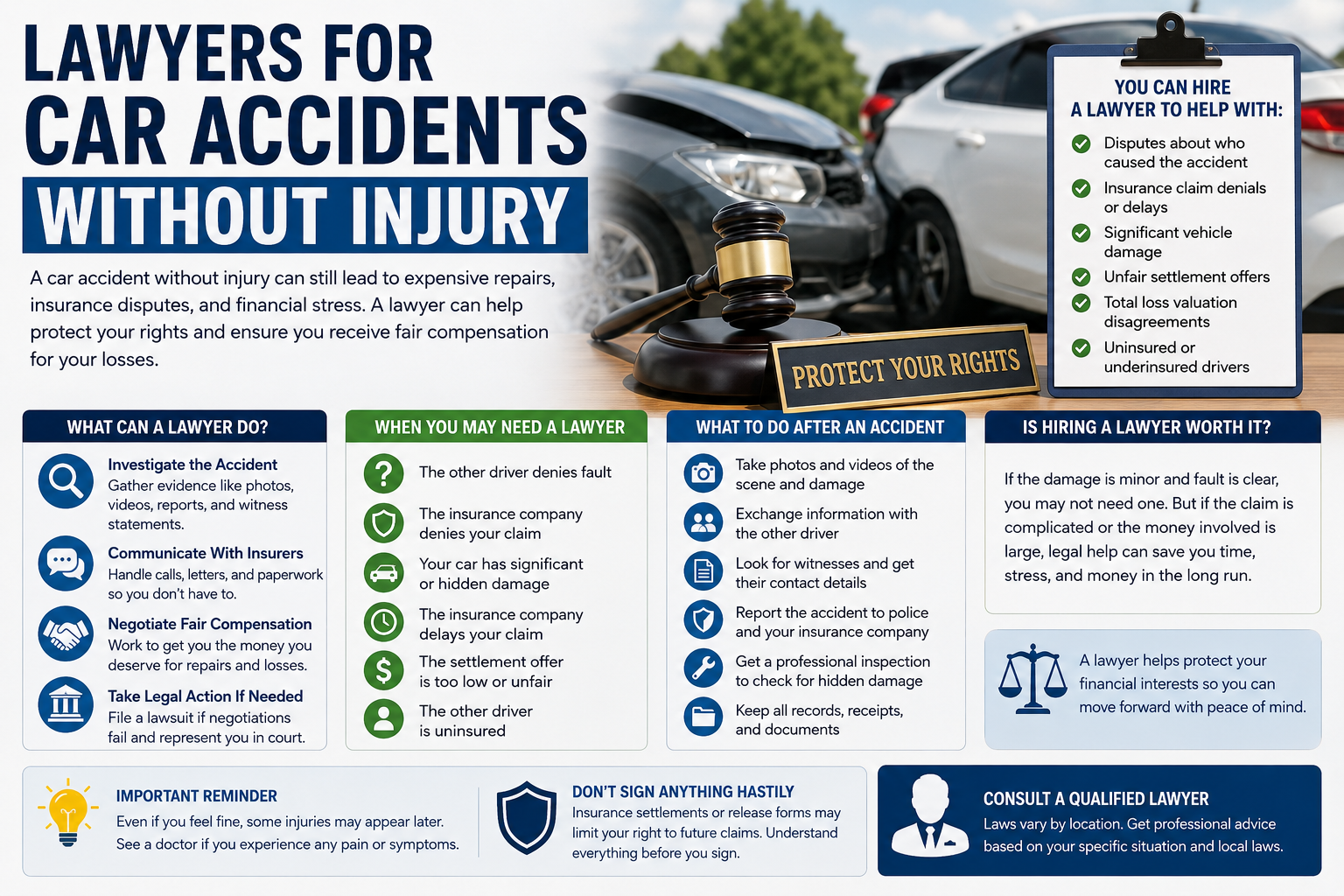
A relatively simple claim involving minor property damage may not require extensive legal representation. However, legal assistance can become more valuable when an accident involves serious injuries, disputed liability, multiple vehicles, uninsured drivers, significant medical expenses, or a disagreement with an insurance company.
An experienced attorney may investigate the accident, gather evidence, communicate with insurers, evaluate damages, and negotiate on behalf of the injured person.
However, no lawyer can guarantee a particular settlement amount. The value of a car accident case can depend on many factors, including the severity of injuries, available insurance coverage, medical evidence, lost income, liability issues, and the strength of the available evidence.How Much Does a Lawyer Get From a Car Accident Settlement in Florida?
Final Thoughts
So, how much does a lawyer get from a car accident settlement in Florida?
In many cases, a Florida car accident lawyer working on contingency may receive approximately 33⅓% of a recovery resolved before certain litigation stages or up to 40% after the case progresses further into litigation, with different percentage tiers applying to portions of larger recoveries and special circumstan
However, the lawyer’s percentage is only one part of the financial picture. Case expenses, medical liens, insurance reimbursement obligations, and other deductions can also affect how much money the client ultimately receives.
Before signing a contingency fee agreement, carefully read the contract and make sure you understand exactly how attorney fees and costs will be calculated. Ask for clarification about any terms that are unclear.
A settlement can provide important financial support after a serious accident, but understanding the fee structure before agreeing to representation can help prevent surprises when the case is finally resolved.
Disclaimer: This article is for general informational purposes only and does not constitute legal advice. Florida laws and professional rules may change, and individual circumstances can affect attorney fees and settlement distributions. Consider consulting a qualified Florida attorney for advice about a specific case.